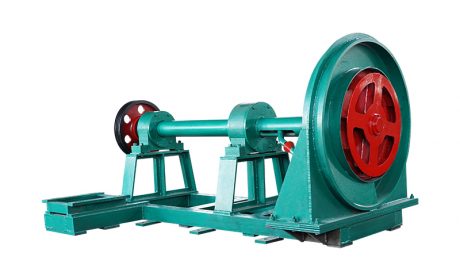
Billet casting is the industrial process of solidifying molten metal—typically steel, aluminum, or copper—into semi-finished rectangular or square sections known as billets. These billets are later used as raw material for rolling mills, forging operations, extrusion plants, and downstream manufacturing.
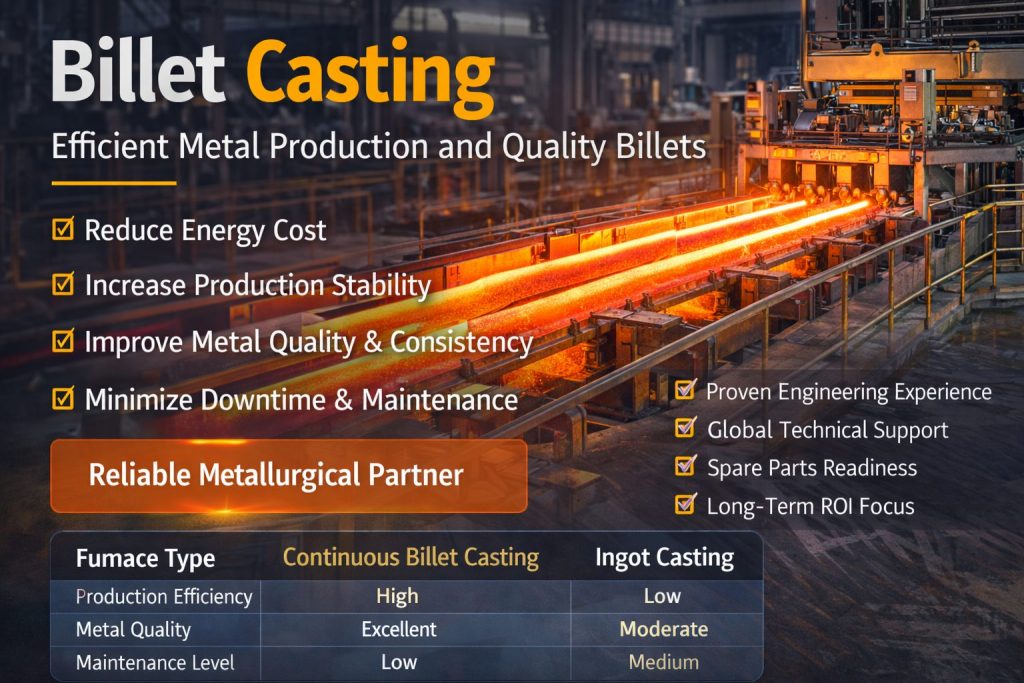
In modern steel plants, billet casting is typically performed through continuous casting systems, where molten metal flows from a furnace into a water-cooled mold and solidifies into a controlled shape before being cut into standard lengths.
For plant owners and engineering directors, billet casting is not simply a metallurgical process. It directly determines:
A well-designed billet casting line can reduce energy costs by 20%, improve throughput stability, and significantly lower maintenance interruptions.
Billets are the primary intermediate product used by many steel and metal manufacturing industries.
Industries relying on billet supply include:
Without a stable billet casting system, downstream operations suffer from inconsistent raw materials.
| Operational Factor | Impact on Production |
|---|---|
| Stable casting temperature | Prevents internal defects |
| Continuous production | Maximizes output |
| Controlled solidification | Improves metal structure |
| Efficient cooling | Reduces cycle time |
In high-volume steel plants, billet casting efficiency directly influences overall plant productivity and operating margin.
Different casting technologies are used depending on production scale, alloy type, and investment capacity.
Continuous casting is the most widely used method in modern steel plants.
Molten metal flows from a tundish into a water-cooled mold where it begins to solidify while moving through the casting machine.
Continuous casting systems can operate 24/7 with minimal interruptions, making them ideal for large steel mills.
Ingot casting was historically used before continuous casting became dominant.
Molten metal is poured into molds and allowed to solidify before further processing.
Today, most modern steel plants have transitioned to continuous billet casting systems.
The billet casting process involves several critical stages.
Each stage must operate with precision to ensure product quality and production efficiency.
Metal is melted in a furnace such as:
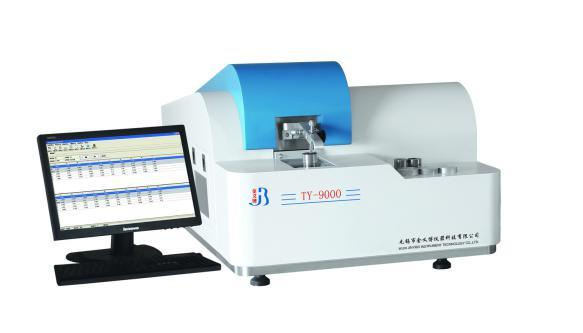
Temperature and chemical composition are carefully controlled.
Molten metal flows into a tundish, which acts as a reservoir and flow regulator.
This stage helps maintain:
The molten metal enters a water-cooled copper mold.
The outer shell begins to solidify while the inner core remains molten.
Precise cooling control ensures proper billet formation.
The partially solidified billet passes through spray cooling zones.
Controlled cooling prevents:
Once fully solidified, the billet is cut into standard lengths using hydraulic shears or flame cutting systems.
These billets are then transferred to rolling mills or storage.
Energy consumption is one of the largest expenses in steel production.
Modern billet casting systems significantly reduce energy waste.
Traditional ingot casting requires reheating billets before rolling.
Continuous casting eliminates this step, saving up to 30% of energy consumption.
Improved casting control reduces oxidation and scrap rates.
Lower scrap means:
Efficient billet casting lines can produce hundreds of tons per hour, dramatically improving plant productivity.
Production instability is one of the biggest concerns for plant operators.
Inconsistent billet quality leads to:
Modern billet casting machines include advanced control systems such as:
These technologies ensure consistent billet dimensions and metallurgical structure.
Unexpected downtime can cost steel plants millions in lost production.
Reliable billet casting equipment minimizes these risks through:
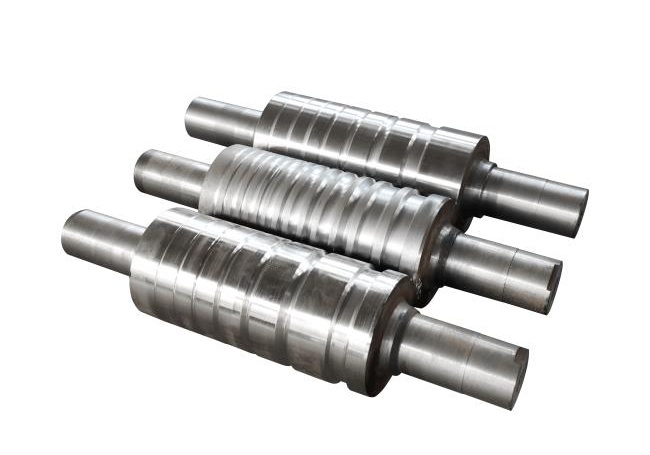
Heavy-duty rollers, precision bearings, and reinforced machine frames ensure long-term durability.
Modern casting lines integrate monitoring systems that detect wear before failure occurs.
Key components such as rollers, molds, and cooling nozzles can be replaced quickly without long shutdown periods.
These features significantly reduce maintenance complexity and operational risk.
Many manufacturers face challenges when purchasing billet casting equipment.
Common issues include:
Choosing the right supplier is critical.
A reliable industrial furnace and casting equipment manufacturer should provide:
Decades of metallurgical equipment design ensures stable system performance.
Equipment must meet international electrical, safety, and environmental standards.
Fast-response service teams minimize production interruptions.
A reliable spare parts logistics system ensures critical components are always available.
Industrial buyers increasingly prefer suppliers who act as long-term engineering partners, not just equipment vendors.
Industrial decision-makers rarely evaluate equipment based solely on purchase price.
Instead, they analyze Total Cost of Ownership (TCO).
| Factor | Long-Term Impact |
|---|---|
| Energy efficiency | Lower operational costs |
| Equipment reliability | Reduced downtime |
| Production speed | Higher plant throughput |
| Maintenance complexity | Lower service costs |
| Equipment lifespan | Longer capital value |
Modern billet casting systems typically achieve return on investment within 2–3 years due to improved efficiency and reduced energy consumption.
For steel plants operating at large scale, these improvements translate into millions of dollars in annual savings.
Billet casting produces semi-finished metal products used as raw material for rolling, forging, and extrusion processes.
Common metals include:
Billets are square or round cross-sections used for bars and rods, while slabs are wider rectangular sections used for sheet and plate production.
Downtime can be minimized through:
With proper maintenance, industrial billet casting machines can operate 15–25 years while maintaining stable production performance.
Billet casting is a critical process in modern metal manufacturing, forming the foundation for rolling, forging, and extrusion industries.
A high-performance billet casting system enables manufacturers to achieve:
For factory owners and engineering leaders, the decision to invest in advanced billet casting technology is not simply about equipment—it is about building a reliable and profitable production system for the next decade.
Working with experienced industrial equipment partners ensures that casting lines deliver stable performance, dependable service support, and sustainable production efficiency.
Please send us your request and we reply to you with in 24 hours.



Submit Request