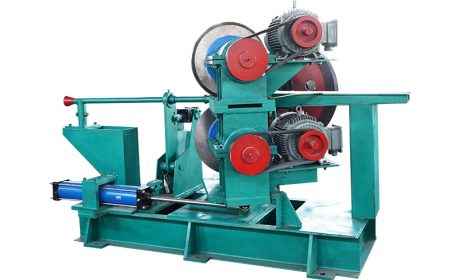
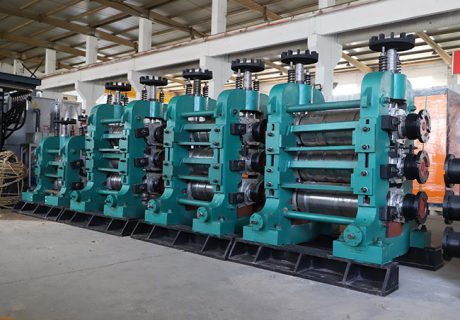
A rebar rolling mill for sale refers to a complete industrial production line designed to transform semi-finished steel billets—typically square billets—into reinforced steel bars (rebar) through a series of hot rolling processes. These mills utilize a sequence of rolling stands (roughing, intermediate, and finishing) to reduce the cross-section of the billet while increasing its length and imparting the characteristic ribs required for concrete bonding. For construction suppliers and steel manufacturers, investing in a rebar rolling mill is the primary method to capitalize on the global demand for infrastructure, as rebar remains the most consumed steel product in the world.
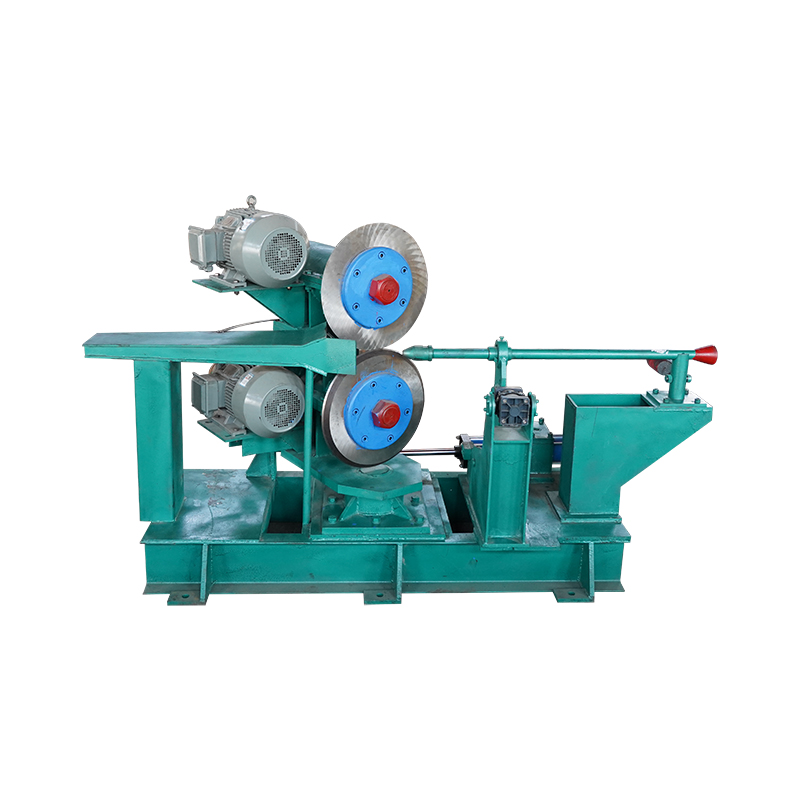
In the current 2026 market, the search for a rebar rolling mill for sale is increasingly focused on Micro-Mill and Mini-Mill configurations. These compact, highly automated systems allow for an annual production capacity ranging from 50,000 to over 500,000 tons. Strategic data indicates that modern mills equipped with High-Speed Finishing Blocks can achieve delivery speeds of up to 100 meters per second, significantly lowering the cost-per-ton compared to legacy systems.
When evaluating a rebar rolling mill for sale, it is critical to understand that the system is not a single machine but a synchronized assembly of thermal and mechanical components. The efficiency of the mill is determined by how well these stages integrate.
The process begins with the reheating furnace, typically powered by natural gas or induction. The furnace must heat the steel billets to a uniform plastic state (usually between 1,000°C and 1,200°C). A "Cold Spot" in a billet can damage the rolls or cause a "cobble" (a catastrophic jam in the mill).
Most high-end rebar rolling mills for sale today are equipped with TMT (Thermo-Mechanical Treatment) units. This technology has replaced the need for expensive alloying elements to achieve high strength.
As the hot bar exits the final finishing stand, it passes through a water-quenching box. This rapid cooling transforms the outer layer of the bar into Martensite (a hard, strong structure) while the core remains Austenite (hot and ductile).
Once the bar leaves the quenching box, the residual heat from the core migrates to the surface, tempering the Martensite. This results in a bar with a high yield strength surface and a flexible core, which is the gold standard for earthquake-resistant construction.
Expert Note: If you are sourcing a mill for the 2026 market, ensuring the TMT unit is included is vital. Without TMT capabilities, your rebar will struggle to meet international standards like ASTM A615 or BS
The modern rebar rolling mill for sale is no longer a manual operation. Digitalization is the key differentiator in reducing operational expenditure (OpEx).
Advanced mills use Siemens or ABB PLC systems to synchronize the speed of every stand. If stand #4 is running 0.1% faster than stand #3, it can create tension that thins the bar. Automation maintains "Zero-Tension" rolling, ensuring the diameter is consistent throughout the entire kilometer-long bar.
The latest 2026 models incorporate vibration sensors on the gearboxes and thermal cameras on the motors. These AI tools predict when a bearing will fail or when a roll needs to be re-grooved.
When browsing for a rebar rolling mill for sale, your choice must be dictated by your local market demand. Rolling mills are generally classified by their "Tons Per Hour" (TPH) capacity.
| Mill Type | Capacity (TPH) | Annual Capacity | Target Market |
| Micro Mill | 5 - 15 TPH | 30k - 80k Tons | Local construction / Niche alloys |
| Medium Mill | 20 - 50 TPH | 150k - 350k Tons | Regional infrastructure supply |
| Large Scale Mill | 60 - 120+ TPH | 500k - 1M+ Tons | International export / Mega-projects |
| High Speed Mill | Up to 100 m/s | High Volume | Small diameter rebar (8mm-12mm) |
Purchasing a rebar rolling mill for sale is a capital-intensive decision. A thorough ROI analysis must account for the "spread"—the difference between the price of steel billets and the market price of finished rebar.
In a healthy market, the value-add of rolling a billet into rebar is typically between $80 and $150 per ton.
Searching for a rebar rolling mill for sale online can lead to a sea of options. To ensure a successful investment, follow this vetting checklist:
Client: A medium-sized steel plant in Southeast Asia.
Problem: High energy costs and inconsistent rebar strength in their 20-year-old manual mill.
Solution: Replaced the intermediate and finishing sections with a new automatic rebar rolling mill featuring a TMT quenching box and a walking-beam cooling bed.
The Results:
A common dilemma when looking at a rebar rolling mill for sale is whether to buy new or used.
Answer: Most rebar rolling mills are designed for square billets ranging from 100mm x 100mm to 150mm x 150mm. Larger billets are used for heavy structural steel but can be used for rebar in high-capacity mills.
Answer: A typical rebar rolling mill for sale with a capacity of 200,000 tons per year requires a factory floor length of approximately 150 to 250 meters and a width of 25 to 40 meters, including the cooling bed and bundling area.
Answer: The flying shear is a high-speed cutting machine that cuts the continuous bar into commercial lengths (usually 12 meters) while the bar is still moving. It is essential for maintaining high production speeds.
Answer: Many modern mills are "Combined Mills." By adding a specialized high-speed wire rod block at the end of the line, the same furnace and roughing stands can produce both rebar and wire rod coils.
Answer: A modern, highly automated mill can be operated by as few as 6 to 8 people per shift, focusing primarily on the pulpit (control room), the furnace, and quality inspection.
Answer: Scale loss is the iron oxide that flakes off the hot steel. It can be reduced by using a Walking Beam Furnace for more uniform heating and by implementing high-pressure water descalers before the first rolling stand.
Choosing a rebar rolling mill for sale is a defining moment for any industrial enterprise. In 2026, the successful mill is one that balances high throughput with metallurgical precision. By focusing on TMT technology, automation, and energy-efficient reheating, you can transform raw steel into the literal backbone of the modern world. Whether you are building a boutique Micro-Mill or a global-scale Mini-Mill, the key to a sustainable ROI lies in technical diligence and a partnership with a vendor who understands the future of steel.
Please send us your request and we reply to you with in 24 hours.



Submit Request