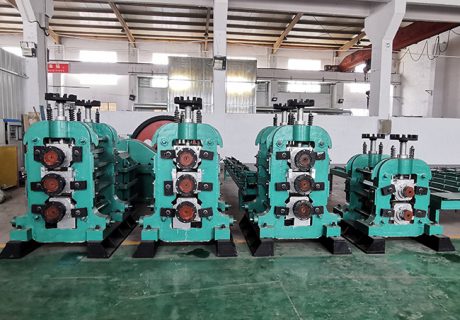
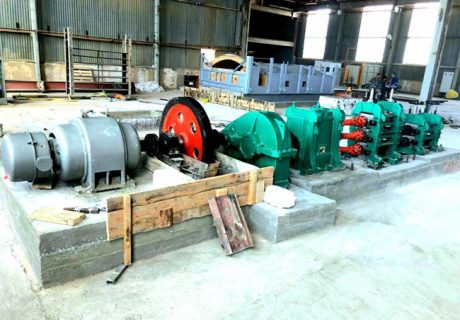
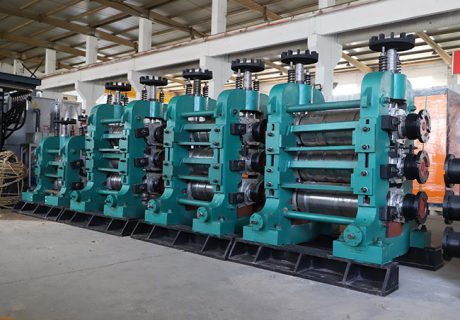
The paradox of production capacity and flexibility A survey of a steel enterprise with an annual output of 50,000 tons showed that its 650 rolling line has a minimum economic batch of 80 tons, and it takes 6 hours to switch specifications, resulting in a gross profit margin of 12% for small batch orders. After adopting a small rolling line, 15 tons can be profitable, and the changeover time is compressed to 45 minutes.
Energy cost black hole The no-load power of traditional continuous rolling mills is as high as 38% of the rated power. The measured data of a rebar plant shows that when rolling Φ12mm steel bars, the power consumption per ton reaches 98kW·h, of which 32% is consumed by the transmission system in standby state.
Space utilization dilemma A survey of an industrial park shows that the traditional rolling line occupies an average of 1,200 square meters, but the equipment area utilization rate is only 58%, and the remaining space is occupied by auxiliary facilities such as huge hydraulic stations and lubrication systems.
Five technological revolutions of small steel rolling lines
Space folding design Three-dimensional layout technology: vertically stack rough rolling, medium rolling and finishing rolling units to shorten the production line length by 62% Actual test case: A stainless steel decorative plate enterprise in Zhejiang deployed three sets of small rolling lines in an 800㎡ factory building to achieve an annual production capacity of 90,000 tons
Intelligent power distribution Dynamic energy efficiency management system: automatically adjust the motor output according to the rolling procedure, and a cold-rolled strip production line actually saves 23% of electricity Core technology: Siemens SINAMICS S210 servo drive system, with a response speed of 0.1ms
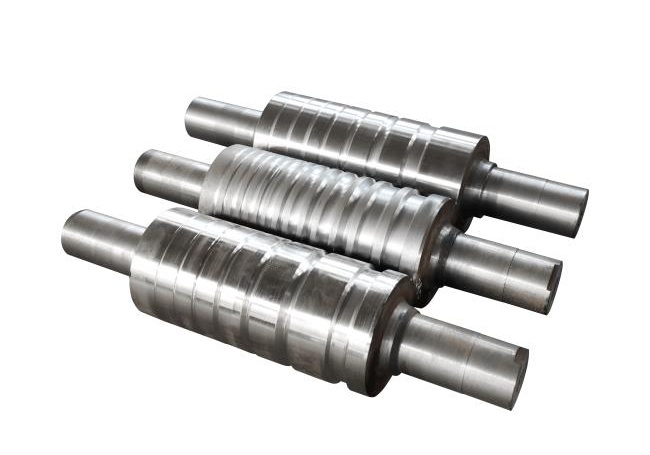
Modular quick-change system Key technical parameters: Roller switching time: ≤30 minutes (traditional production lines require 48 hours) Adaptive specification range: 0.525mm thickness (achieved by combining different modules) Economic benefits: After the introduction of a hardware factory in Guangdong, the profit margin of small batch orders increased to 18%
Micro water treatment cycle Innovative design: Integrate the cooling water system into the equipment base, reducing water storage by 75% Environmental benefits: A rolling line renovation project shows that 38,000 tons of water are saved annually, and the wastewater reuse rate is increased to 92%
Edge intelligent control System architecture: 5G+MEC edge computing node Real-time collection of 132 types of process parameters Application effect: After deployment in a precision steel strip factory in Shandong, the thickness fluctuation dropped from ±0.05mm to ±0.015mm
III. Scenario solution verification Case 1: Urban scrap steel recycling center Equipment configuration: 300-type short-process rolling line + online detection of metal composition Operation data: Mixed scrap steel processing capacity: 5 tons/hour Recycled steel bar qualification rate: 91%→99.3% Value-added benefit per ton: Increased by 280 yuan
Case 2: Customized auto parts factory Technical solution: Reversible six-roll mill + AI plate shape control system Production improvement: Thinnest rolling thickness: 0.15mm (meets the needs of new energy vehicle battery shell) Order response speed: shortened from 7 days to 12 hours Material utilization rate: 82%→95%
Case 3: Material laboratory of scientific research institutes Micro-rolling line parameters: Area: 8m×3m Minimum sample size: 200mm×50mm Temperature control accuracy: ±2℃ Achievement output: A high-strength magnesium alloy developed by a university using this equipment has an impact toughness increased by 3 times