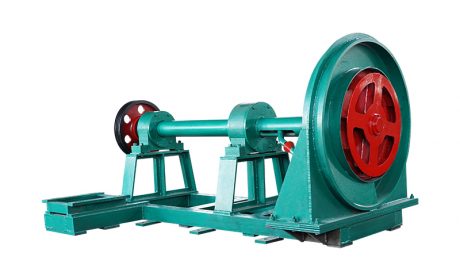
Furnace Rolling Mill Key Equipment and Technology for Metal Processing
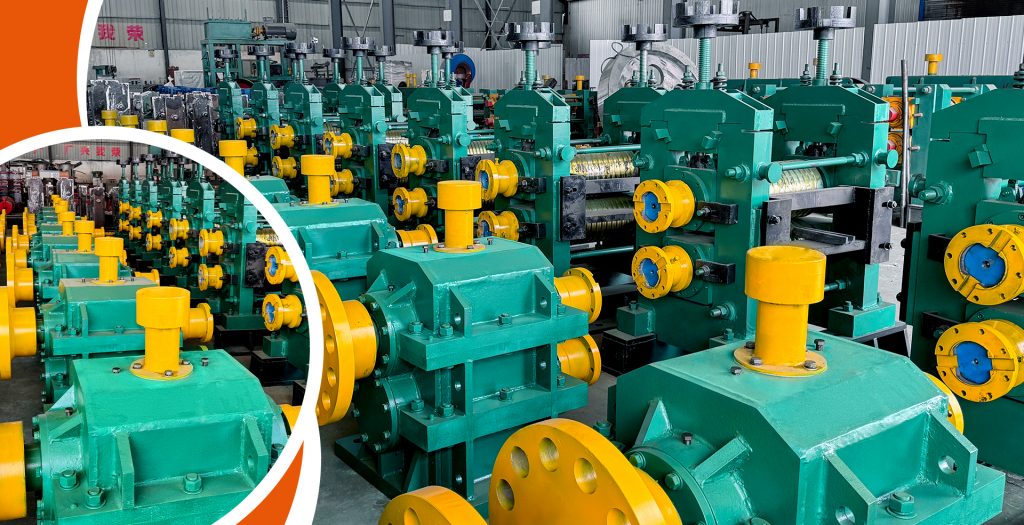
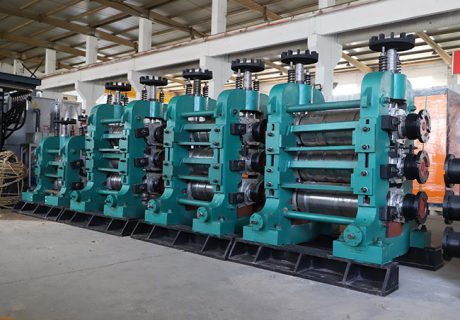
In the modern metal processing industry, rolling mills play a vital role. They transform metal billets into finished products of desired shapes and sizes through a series of complex processes and equipment. Among these equipment, the furnace rolling mill is particularly critical. It achieves plastic deformation of metal billets through heating and rolling processes, thereby producing high-quality metal products. This article will explore in depth the working principle, types, applications and importance of the furnace rolling mill in modern industry what is rolling mill process.
Working Principle of Furnace Rolling Mill
The working principle of the furnace rolling mill is mainly based on the principle of plastic deformation of metal. When the metal billet enters the rollers of the hot rolling mill, it is subjected to the pressure of the rollers and undergoes plastic deformation. In this process, the internal grain structure of the metal billet changes, thereby improving its physical properties and mechanical properties. Specifically, the workflow of the furnace rolling mill includes the following steps
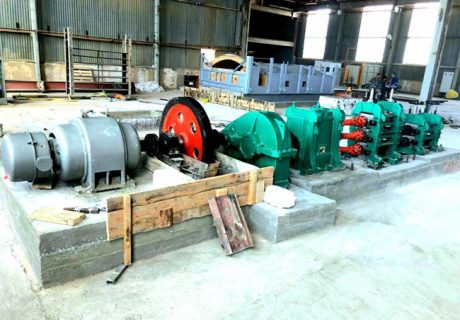
Heating process: The metal billet is first sent to the heating furnace for preheating to increase its plasticity and reduce its deformation resistance. The heating furnace usually uses resistance heating or gas heating to ensure that the metal billet reaches a suitable temperature before rolling.
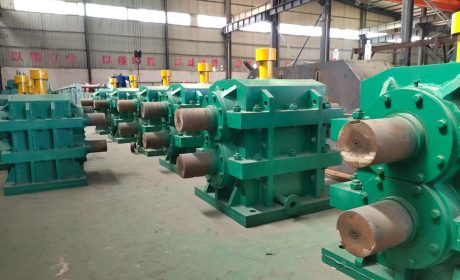
Rolling process: The preheated metal billet is fed into the roller room and gradually undergoes plastic deformation through the rotation and extrusion of the rollers. The rolling process includes three stages: initial rolling, finishing rolling and final rolling. Each stage has different rolling processes and rolling parameters to meet different steel requirements.
Cooling and subsequent treatment: The metal products after rolling need to be cooled and subsequently treated to improve their hardness and strength. Cooling methods include natural cooling and forced cooling, and subsequent treatment includes shearing, packaging, surface treatment and other processes.
Types of Furnace Rolling Mill
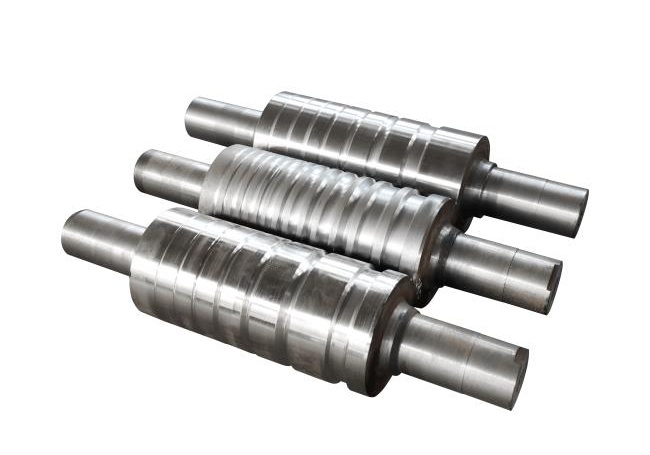
Furnace Rolling Mill can be divided into many types according to its structure and working principle. Among them, according to the number and arrangement of rollers, it can be divided into two-roll mills, three-roll mills, four-roll mills, etc.; according to the type and purpose of the rolled metal, it can also be divided into hot rolling mills, cold rolling mills, profile mills, etc. The following are several common types of furnace rolling mills:
Two-roll mill: The two-roll mill is the simplest type of mill, consisting of two rollers. It is mainly used to roll metal billets with larger thickness, such as steel plates, steel strips, etc. The two-roll mill has a simple structure and is easy to operate, but the rolling accuracy and efficiency are relatively low.
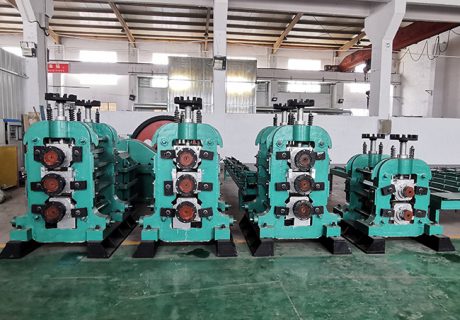
Three-roll mill: The three-roll mill adds a roller to the two-roll mill to adjust the width and thickness of the metal billet. The three-roll mill has higher rolling accuracy and efficiency and is suitable for rolling metal products with higher requirements for width and thickness.
Four-roll mill: The four-roll mill consists of four rollers, which can more accurately control the shape and size of the metal billet. The four-roll mill is usually used to roll high-precision, high-quality metal products, such as precision steel pipes, alloy steel plates, etc.
Hot rolling mill: The hot rolling mill is mainly used to roll metal billets at high temperatures. During the hot rolling process, the metal billet is heated to a suitable temperature in the heating furnace and then quickly fed into the roller room for rolling. Hot rolling mills have the advantages of high production efficiency, large rolling force, and high rolling precision, and are widely used in the production of steel, non-ferrous metals and other industries.
Cold rolling mills: Cold rolling mills are used to roll metal billets at room temperature. Compared with hot rolling mills, cold rolling mills have smaller rolling force but higher rolling precision, and are suitable for rolling metal products with thinner thickness and higher precision requirements.
Application of Furnace Rolling Mill
Furnace Rolling Mill is widely used in industrial production. Here are some of the main application areas:
Steel Industry: In the steel industry, Furnace Rolling Mill is mainly used to roll metal products such as steel plates, steel strips, and steel pipes. These products are widely used in construction, machinery, automobiles and other fields. Through the rolling of Furnace Rolling Mill, steel plates and steel strips of different thicknesses, widths and lengths can be obtained to meet various industrial needs.
Non-ferrous metal and alloy processing: Furnace Rolling Mill also plays an important role in non-ferrous metal and alloy processing. It can roll various non-ferrous metals and alloy materials such as aluminum, copper, zinc, etc. These materials are widely used in aviation, aerospace, electronics and other fields. Through the rolling of Furnace Rolling Mill, high-precision and high-quality metal products can be obtained to meet the requirements of material performance and precision in these fields.
Processing of non-metallic materials: In addition to metal materials, Furnace Rolling Mill can also be used in the processing of non-metallic materials. For example, it can roll materials such as rubber and plastic to obtain products of the required shape and size. These products are widely used in machinery, chemical industry and other fields.
Development trend of Furnace Rolling Mill
With the development of modern industry, Furnace Rolling Mill is also constantly developing and improving. The following are some major development trends:
Automation and intelligence: With the continuous development of automation and intelligent technology, the degree of automation of Furnace Rolling Mill is getting higher and higher. By introducing advanced control systems and sensor technology, precise control and monitoring of the rolling process can be achieved, and production efficiency and product quality can be improved.
Energy saving and environmental protection: With the increasing awareness of environmental protection today, the energy saving and environmental protection of Furnace Rolling Mill are also receiving more and more attention. By adopting advanced dust removal and purification technology, the pollution of dust and exhaust gas generated during the rolling process to the environment can be reduced. At the same time, the concept of circular economy and resource reuse can also be adopted to transform waste into useful resources and achieve sustainable development.
High precision and high quality: As the market's requirements for the quality and precision of metal products continue to increase, Furnace Rolling Mill is also constantly developing towards high precision and high quality. By adopting advanced rolling processes and equipment, the shape and size of metal products can be precisely controlled to meet the market's demand for high-quality metal products.
Conclusion
In summary, as one of the key equipment in the metal processing industry, Furnace Rolling Mill plays a vital role in modern industrial production. It achieves plastic deformation of metal billets through heating and rolling processes, thereby producing high-quality metal products. With the development of modern industry and the continuous advancement of technology, Furnace Rolling Mill is also constantly developing and improving, moving towards automation, intelligence, energy saving and environmental protection, high precision and high quality. In the future, Furnace Rolling Mill will continue to play an important role in the metal processing industry and provide more efficient, precise and environmentally friendly solutions for industrial production.
Please send us your request and we reply to you with in 24 hours.



Submit Request