"Control of Continuous Tandem Cold Metal Rolling Process" is a complex multivariable control process involving continuous cold rolling of metal strip. The following is a detailed analysis of this process:

I. Process Overview
In the continuous tandem cold rolling process, the metal strip is rolled through a series of motor-driven working rolls, each supported by larger support rolls, gradually pressing the strip to the required thickness. The process is highly nonlinear and multivariable, and there are many engineering challenges in the control process.
II. Control Challenges
VI. Conclusion
In summary, "Control of Continuous Tandem Cold Metal Rolling Process" is a complex and important industrial process, and its control strategies and technologies are of great significance to improving product quality and production efficiency. With the continuous advancement of control theory and technology, more innovative control methods will be applied to this field in the future.
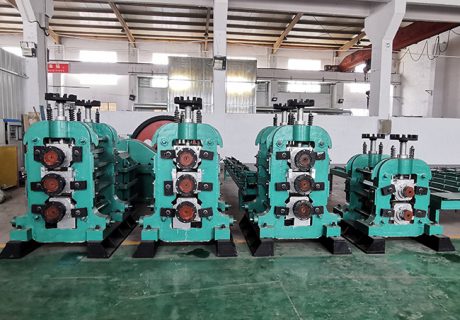
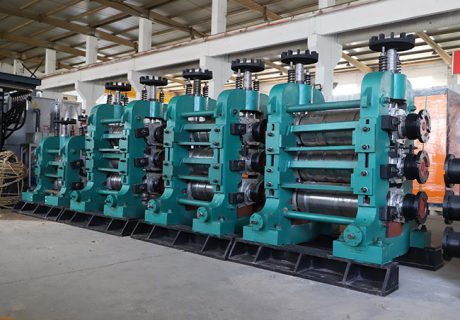
The tandem cold rolling process involves passing a metal strip through a series of independently driven work roll pairs, each supported by a larger diameter backup roll. Figure 1 shows a typical five-stand cold rolling process. As the strip passes through each work roll pair, the thickness of the strip is gradually reduced due to extremely high compressive stresses in the small area between the rolls, i.e., the roll bite. The necessary compressive force is applied by a screw device driven by a hydraulic cylinder or an electric motor.
Process instrumentation monitors the rolling force of each mill stand, the strip tension between adjacent mill stands, the strip thickness at the mill entry and at the exit of the first and last stands, the position signals of the work roll position actuators (hydraulic cylinders or screws), and the speed of the work rolls.
Unlike independent mills, which stop rolling when changing coils, strip is continuously fed into the mill from the upstream process through a strip storage device to achieve uninterrupted rolling. At the entrance of the upstream process, the incoming coil is welded to the coil being processed. As the weld approaches the mill, the mill speed is reduced to reduce the risk of strip breakage as the weld passes and to keep within the required cutting speed range of the shear.
Once the weld leaves the mill and reaches the shear, it is cut and the separated strip head is directed to an available rewinding device, with the pinch rolls closed to maintain tension during the rapid transfer. When tension is established, the pinch rolls open and the mill is accelerated to the required operating speed.
Please send us your request and we reply to you with in 24 hours.



Submit Request