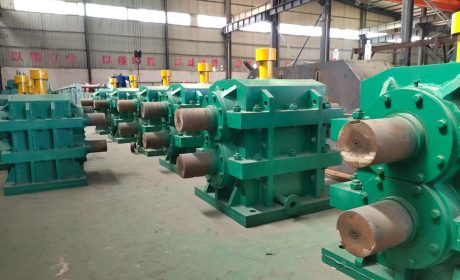
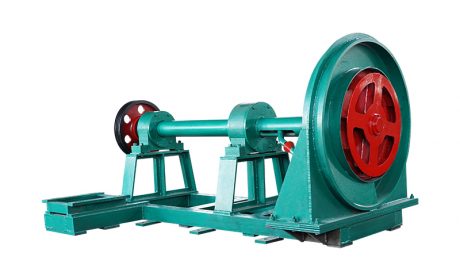
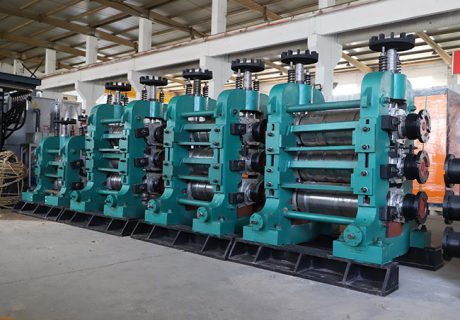
A section rolling mill is a specialized heavy-duty industrial production line designed to hot-roll metal billets into specific structural profiles, such as I-beams, H-beams, angles, channels, and rails. Through a sequence of rolling stands—typically roughing, intermediate, and finishing—the mill utilizes calibrated rolls to reduce the cross-section and shape the material with high dimensional precision and metallurgical consistency.
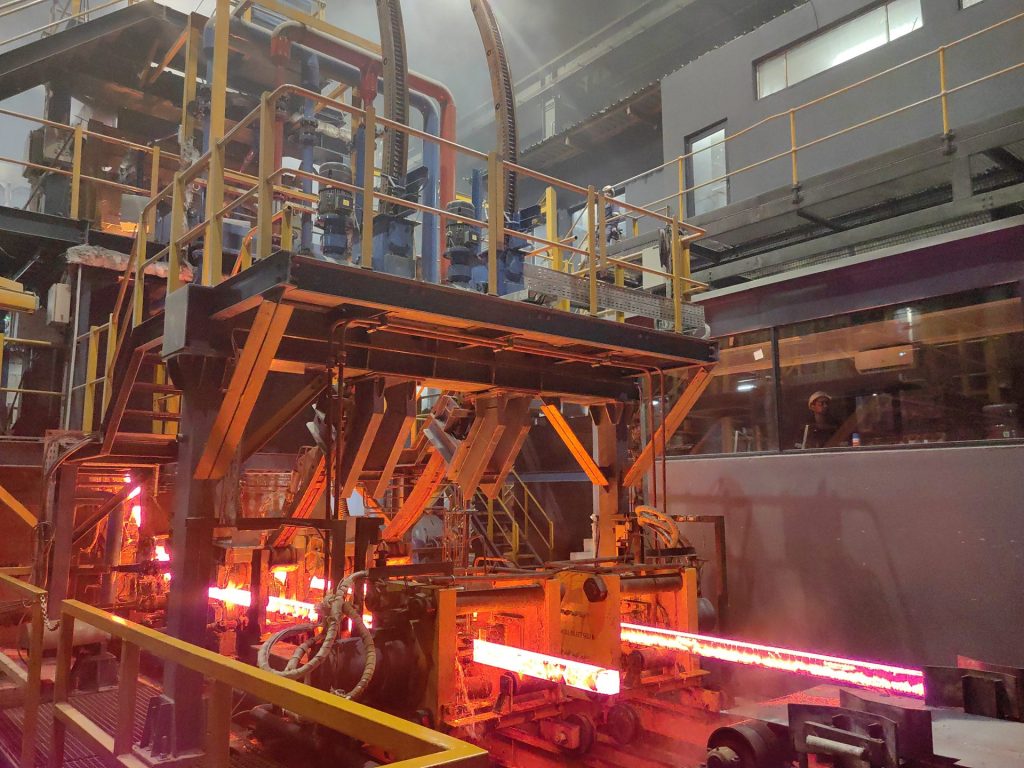
For a steel plant General Manager or Technical Director, the initial purchase price of a section rolling mill is often misleading. The true financial performance of the asset is dictated by its Total Cost of Ownership (TCO). A mill that costs 15% less upfront but suffers from 5% higher energy consumption or frequent unplanned downtime will result in a net loss within the first 36 months of operation.
| Cost Driver | Standard Rolling Mill | Engineered Section Mill (Our Approach) | Impact on Bottom Line |
| Energy Efficiency | High (Resistance-heavy) | AC VFD Drive Optimized | 20-25% OpEx Savings |
| Production Yield | 92% - 94% | 97.5% - 99% | Thousands of tons recovered/year |
| Roll Change Time | 4-6 Hours | <45 Minutes (Quick Change) | Increased daily throughput |
| Maintenance Cycle | Every 500 Hours | Every 2,000+ Hours | Lower labor & parts cost |
| Output Consistency | $\pm 1.5$ mm tolerance | $\pm 0.3$ mm tolerance | Premium pricing for final product |
The primary risk for factory owners is "Output Instability"—where the first 100 tons of the shift meet specifications, but the last 100 tons are rejected due to roll wear or thermal expansion issues.
Our section rolling mills utilize automatic gauge control (AGC) and hydraulic screw-down systems. This ensures that even as the rolls heat up during a long run, the mill adjusts in real-time to maintain exact tolerances.
Energy consumption in a section mill is split between the reheating furnace and the rolling torque requirements. As an expert with 15 years in metal heat treatment, we synchronize the reheating furnace with the rolling speed.
Unplanned downtime in a steel mill can cost upwards of $5,000 to $20,000 per hour in lost productivity. Technical Directors prioritize reliability over all else.
Our section rolling mills are equipped with a suite of industrial IoT sensors that monitor:
By shifting to a predictive model, we help engineering managers reduce maintenance complexity and ensure that the mill operates at peak capacity during peak market demand.
The greatest fear for an international buyer is being left with a "billion-dollar paperweight" due to a lack of local support. Funlife (Zhejiang) New Material Co., Ltd. addresses this through a robust, export-focused service architecture.
A high-performance section rolling mill is a long-term investment. Most of our clients achieve full capital recovery within 18 to 24 months through:
We conduct a Factory Acceptance Test (FAT) before shipment. We simulate your specific production mix—whether it's H-beams or U-channels—to prove the tons-per-hour (TPH) rating. Our contracts include performance-based penalties; we put our skin in the game because our engineering is verified.
Our power systems include harmonic filters and heavy-duty voltage stabilizers designed for the fluctuating grids often found in emerging industrial zones. We protect your electronics from surges and sags that cause most "phantom" downtime.
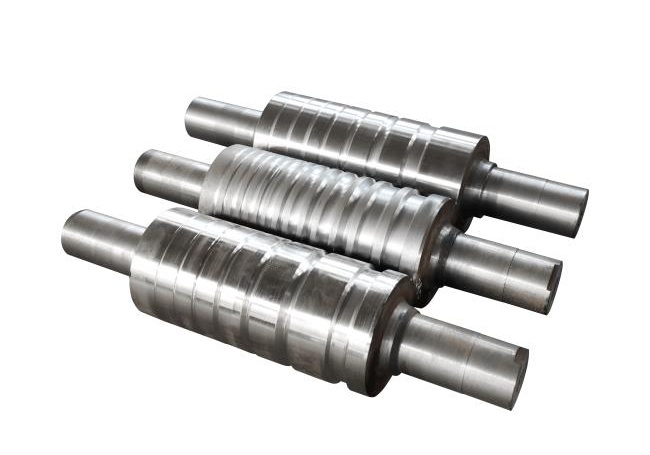
While we provide high-durability rollers, we also provide the full technical drawings for consumable parts. You have the freedom to source locally for standard rolls or use our premium-performance rolls for specialized profiles.
Every figure we provide—from energy consumption per ton to rolling speed—is backed by real-world data from our active installations in Europe, Southeast Asia, and the Middle East. We do not use "ideal laboratory" figures; we use "dirty factory" reality.
Please send us your request and we reply to you with in 24 hours.



Submit Request