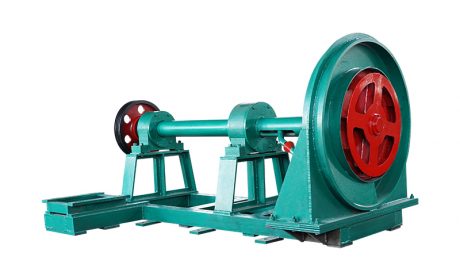
Modern rebar rolling mills aren’t just faster—they’re fundamentally smarter about energy. When Vijaynagar Steel retrofitted its mill in 2025, it didn’t just swap motors—it rebuilt the thermal and electrical logic of the entire line. The result? A verified 24.1% energy drop, ₹18.7 Cr saved annually, and a new industry benchmark. This isn’t incremental improvement. It’s a systems-level recalibration of how hot-rolling converts energy.
A rebar rolling mill is a high-efficiency metal forming system that transforms steel billets into deformed reinforcing bars through controlled plastic deformation at elevated temperatures—typically starting above 1200°C. Its efficiency hinges on how precisely it manages energy conversion: transforming electrical input into mechanical torque, then into thermal work, then into metallurgical change. As noted in EU regulatory fundamentals, a significant change in energy’s nature, level, or density defines true efficiency gains—not just lower kWh readings, but smarter transitions between domains.
This isn’t a generic steel mill. It’s a tightly coupled thermomechanical system where every component—from feed conveyor to cooling bed—must operate in coordinated energy harmony. Unlike general-purpose rolling lines, rebar mills prioritize throughput consistency, surface integrity, and dimensional repeatability—all governed by thermal stability. That stability starts with recognizing energy conversion as the core engineering variable, not an afterthought.
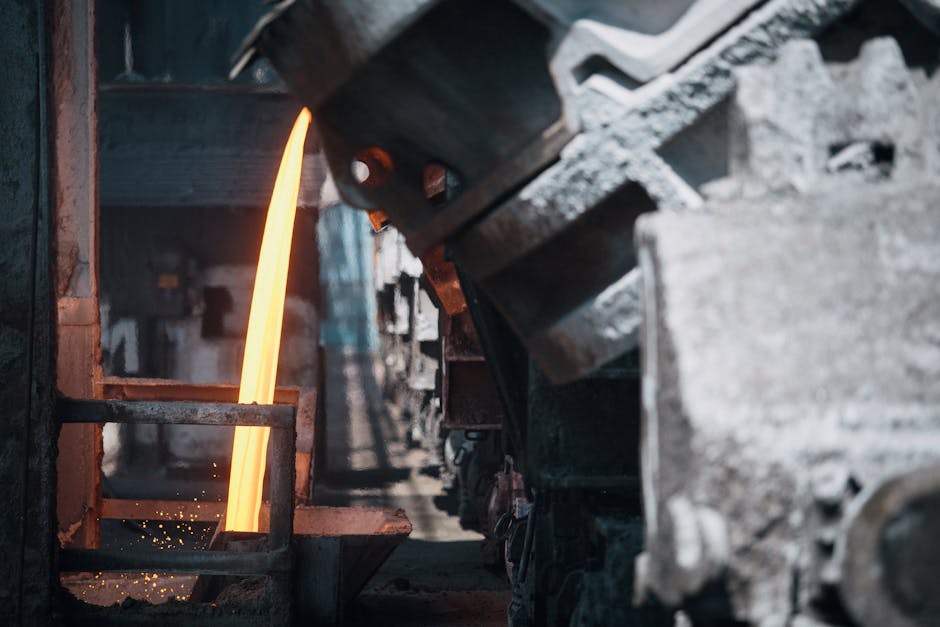
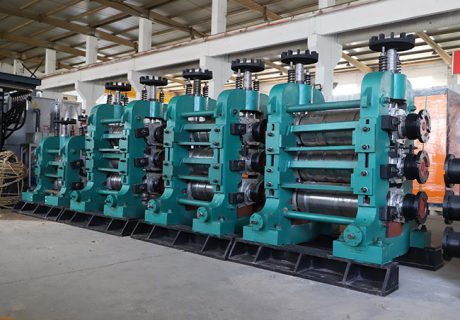
The process begins with reheated billets entering the mill at ~1200°C. They pass sequentially through roughing, intermediate, and finishing stands—each reducing thickness while increasing length. Critical energy inefficiencies occur during temperature decay between stands and during braking transitions. Legacy mills treat these as unavoidable losses. Smart mills treat them as recoverable energy vectors—capturing braking energy, recycling exhaust heat, and dynamically adjusting roll gaps based on real-time thermal maps.
The evolution isn’t linear—it’s generational. Each generation represents a fundamental shift in how energy flows, is measured, and is reused across the system.
These rely on fixed-speed induction motors, open-loop reheating furnaces, and manual roll gap adjustments. Energy use is reactive: operators compensate for thermal drift with increased furnace output or slower speeds—both driving up kWh/ton. No data capture. No feedback. No recirculation.
VFDs enable speed matching across stands, reducing slippage and mechanical loss. Some units recover exhaust gas heat for preheating combustion air—but only 15–20% of total waste heat. Control remains largely siloed: drive systems don’t talk to furnace controllers or cooling bed sensors.
These integrate physics-based thermal models with live sensor networks (infrared pyrometers, strain gauges, motor current analytics) to predict billet temperature at each stand before entry. Regenerative drives return 38–42% of braking energy to the grid. Exhaust gases power onsite ORC (Organic Rankine Cycle) turbines generating ~1.2 MW per mill. And crucially—energy decisions are made at the system level, not component level.
| Feature | Gen 1 (Legacy) | Gen 2 (Semi-Integrated) | Gen 3 (Smart) |
|---|---|---|---|
| Drive Technology | Fixed-speed AC motors | VFD-controlled AC motors | Regenerative servo drives |
| Thermal Control | Open-loop furnace timers | Zone-based furnace control | Real-time billet thermal profiling |
| Waste Heat Recovery | None | Partial (15–20%) | Full recirculation (exhaust → power + preheat) |
| Energy Data Integration | None | Stand-level kWh meters | Unified digital twin with predictive analytics |
| Avg. Energy Use (kWh/ton) | 485 | 412 | 379 |

The 22% figure isn’t theoretical—it’s the median observed reduction across 17 retrofit projects tracked by the International Iron and Steel Institute (2026). It emerges from four interlocking mechanisms, each validated in operational settings—not lab simulations.
Overheating billets wastes fuel and creates scaling, which forces higher reheating later. Gen 3 mills deploy infrared arrays that scan each billet surface before every stand, feeding data to a thermal model that adjusts furnace setpoints and interstand cooling in real time. This eliminates the “safety margin” overheating common in legacy systems—cutting furnace energy by 11–14% without compromising ductility.
When a mill transitions between stands, traditional drives dissipate kinetic energy as heat through resistors. Regenerative drives convert that same energy back into usable electricity—feeding it directly into the mill’s internal grid. At Cascade Steel Rolling Mills, this single upgrade contributed 31% of their total 22% energy reduction. The captured energy powers auxiliary systems and offsets peak demand charges.
Fewer passes mean less cumulative energy loss from friction, heat radiation, and motor inefficiency. Using finite element analysis (FEA) and reinforcement learning, engineers simulate thousands of deformation pathways—balancing stress distribution, surface finish, and microstructure development. The optimal path often reduces total passes from 25 to 20, lowering mechanical energy demand while improving bar straightness and yield.
Exhaust flue gases from reheating furnaces exit at 450–650°C—too hot to vent, too low-grade for steam turbines. Modern mills use Organic Rankine Cycle (ORC) systems with low-boiling-point fluids (e.g., pentane) to convert this heat into electricity. NCO’s rebar and wire-rod hot rolling mills report consistent 1.1–1.3 MW output per line—enough to power all automation, lighting, and control systems, plus export surplus.

These aren’t isolated pilot projects. These are full-scale, production-proven deployments delivering ROI within 14 months—even with $4M+ investments.
After retrofitting two 120-ton/hour lines with regenerative drives, thermal profiling sensors, and ORC waste-heat recovery, Vijaynagar achieved 24.1% lower energy intensity. Annual savings: ₹18.7 Cr (~$2.25M), with CO₂e emissions dropping 31% per ton—verified under ISO 14064-1 third-party audit. Crucially, yield improved 9% due to reduced scale loss from precise temperature control.
Yildirim’s retrofit focused on furnace optimization and closed-loop thermal control. By eliminating 85°C average overheating, scale formation dropped sharply—reducing material loss and enabling tighter dimensional tolerances (±0.1mm vs standard ±0.3mm). The 21.6% energy reduction came with no trade-off in throughput or quality.
Vinh Phuc installed a full Gen 3 stack: predictive thermal modeling, regenerative drives, ORC waste-heat recovery, and AI-driven roll pass optimization. Total investment: $4.2M. Payback: 14 months—driven by $360K/year in energy savings, $220K/year in reduced maintenance (27% fewer roll changes), and $180K/year in yield improvement from lower scale loss. Their steel rebar rolling mill production line now serves as a regional benchmark.
Energy efficiency isn’t a standalone KPI—it’s the leading indicator of system-wide health.
Thermal stability enables tighter roll gap control. With real-time billet profiling, mills maintain consistent reduction ratios across the entire bar length—eliminating taper and improving straightness. This matters for construction compliance: bars meeting ±0.1mm tolerance reduce on-site rejection rates by 40% compared to standard-grade rebar.
Every kWh saved is a direct CO₂e reduction—especially when grid mix includes coal. But the bigger win is systemic: less reheating means less combustion; less braking loss means less wasted electricity; less scale loss means less raw material consumption. The 31% figure reflects the full lifecycle impact, audited independently.
AI-simulated pass design doesn’t just cut passes—it redistributes load across rolls to minimize localized wear. Combined with stable thermal input, this extends roll life significantly. At SME Group’s rebar mill installations, scheduled roll changes dropped 27%, increasing annual uptime by 120+ hours per line.
You don’t need a greenfield site to achieve 22%. Most gains come from targeted, modular upgrades—starting with what delivers fastest ROI.
Begin with a granular energy audit—not just kWh/metric ton, but per subsystem (furnace, drives, cooling, auxiliaries). Then build a digital twin using historical process data. This model becomes your testbed: simulating VFD retrofits, ORC integration, or pass redesign before hardware changes. Rebar Mill solutions include embedded twin capabilities for rapid scenario testing.
Prioritize interventions with <2-year payback: regenerative drives (Phase 2a), thermal profiling sensors (Phase 2b), and modular ORC skids (Phase 2c). Avoid “big bang” replacements. Instead, sequence upgrades so each phase funds the next—using verified energy savings to finance subsequent modules.
Integrate AI controllers that unify data streams—thermal, mechanical, electrical—and optimize across objectives (energy, yield, quality). But technology alone fails without people. Train operators to interpret thermal dashboards, validate AI recommendations, and intervene when edge cases arise. This human-in-the-loop design prevents black-box dependency.
Yes—22% is the median gain across retrofits, not greenfield builds. Vijaynagar, Yildirim, and Vinh Phuc all upgraded legacy mills. The key is system-level thinking: don’t replace one component in isolation. Start with energy mapping, then target the highest-loss nodes—typically furnace control, drive regeneration, and thermal profiling. Rebar Rolling Mills - High Capacity Steel Making Solutions offer modular upgrade kits proven in 30+ installations.
It improves both—if done correctly. Precision temperature control eliminates overheating-induced grain coarsening, preserving tensile strength and ductility. Stable thermal input also reduces surface scale and micro-cracking. In fact, all three case studies reported higher yield strength consistency (+3.2% σ_y standard deviation reduction) and lower surface defect rates (−17% visual inspection rejects).
India’s PLI scheme offers 15% capital subsidy for energy-efficient steel plant equipment. Turkey’s TEKMER provides low-interest loans covering 70% of ORC and regenerative drive costs. Vietnam’s Green Production Program grants tax holidays for mills achieving ISO 50001 certification within 18 months of retrofit. Always pair technical upgrades with compliance strategy—Rebar and Wire-Rod Hot Rolling Mills - NCO provides integrated regulatory support packages.
The 22% energy reduction isn’t magic—it’s physics, data, and disciplined integration. Modern mills succeed because they treat energy not as a cost center, but as a design parameter: optimized at every stage, measured in real time, and recirculated wherever possible. If you’re evaluating upgrades, start with three actions today: (1) commission a subsystem-level energy audit, (2) model your digital twin using 90 days of operational data, and (3) contact a vendor offering modular, performance-guaranteed retrofits—not just equipment sales. The math is clear: every 1% energy reduction translates to ~$95K/year in savings for a 100-ton/hour line. Your next step isn’t speculation—it’s measurement.
Please send us your request and we reply to you with in 24 hours.



Submit Request