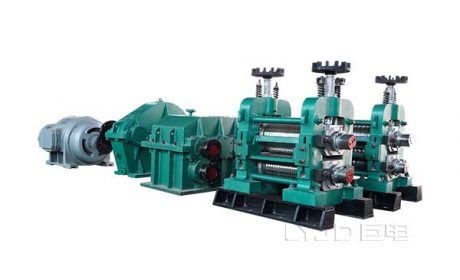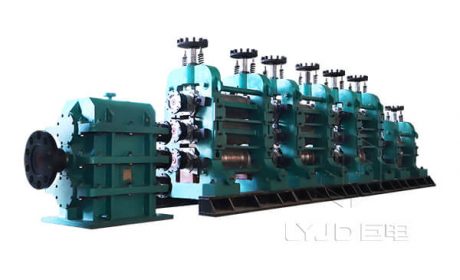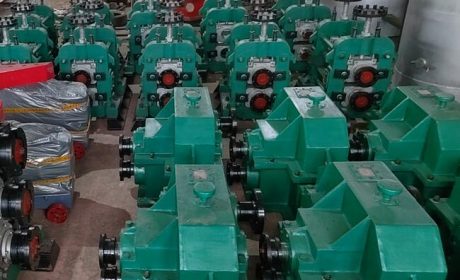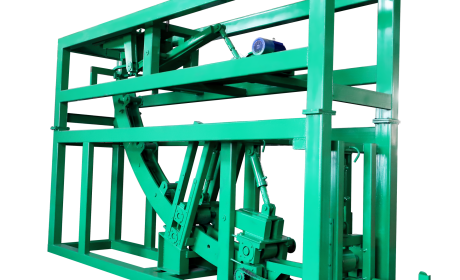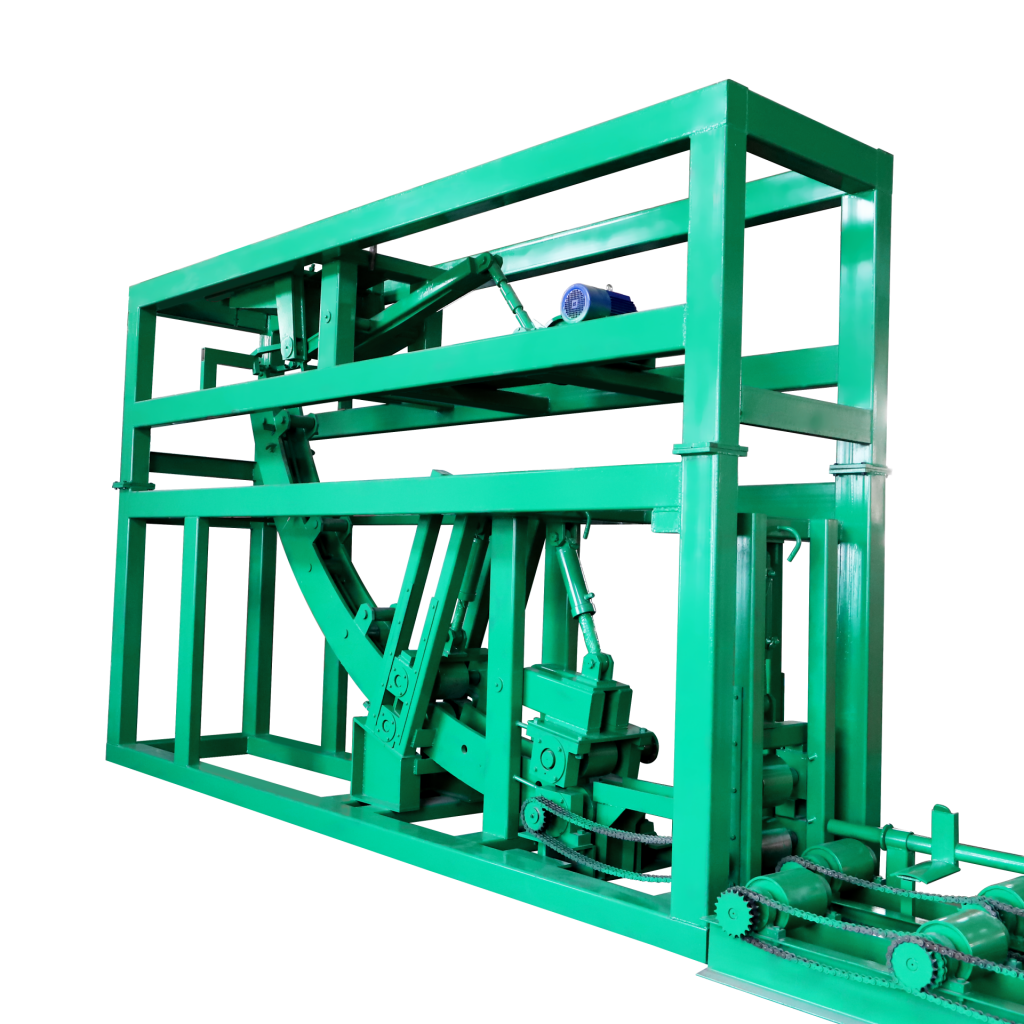
Roller installation and rolling adjustment are a core part of completing and establishing a stable rolling process. The purpose of rolling mill adjustment is to ensure the good running condition of the rolling mill and ensure that the rolling process is carried out according to the feasible process system, so as to ensure the rationality of the production process, ensure the product quality, reduce the steel pile accident and increase the rolling mill operating rate.
In order to achieve the above objectives, the mill adjustment work should first re-confirm the rolls, guides and frames provided for the roll inspection section, implement the online replacement and installation of the above components, and complete the on-line pre-adjustment of the rolling mill. In the rolling process, according to the quality situation, the adjustment workers judge the cause of the accident in the production accident in time, formulate a reasonable adjustment plan and adjust and implement it. Adjustment should ensure the accuracy of the geometry and geometrical dimensions of the rolling stock, ensure the micro-tension control of the rolling mill and the tension-free control of the looper to ensure the normal continuous rolling process.
The completion of the rolling process is divided into three steps: firstly, the replacement of the rolling mill is completed or the replacement of the rolls is carried out; then the rolling mill is pre-adjusted; the final rolling mill starts normal rolling and the on-line rolling mill is adjusted.
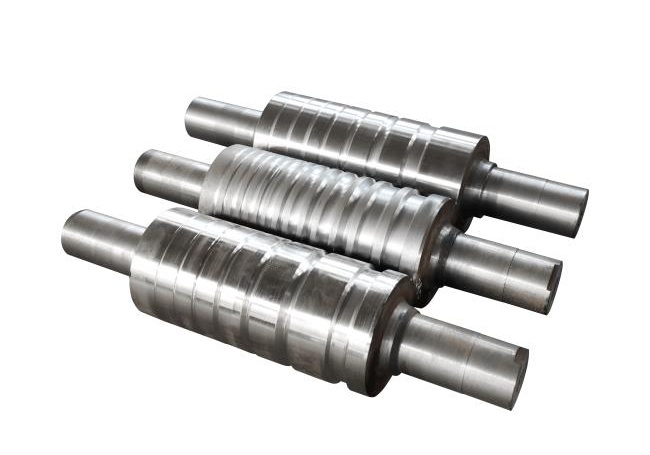
Before changing the roll, it is necessary to check whether the upper roll is the roll of the changed number, rolling type and specification; the slides, the flat head of the roll and the inner hole of the sleeve should be scrubbed, and the clean grease should be applied after being cleaned. After the preparation is completed, the rack work can be replaced according to the roll change plan. The working steps are as follows:
Turn off the mill cooling water and remove the inlet and outlet guides. Unscrew the water pipe joint of the upper and lower rollers. Start the hydraulic locking device that opens the rack. Horizontal rack selects “Rack traverse” to advance the frame and move the mill to the extreme position on the operating side. (The vertical rolling mill selects the “rack lifting/lowering” button to lower the frame and lower the rolling mill to the lower limit position.) Pull out the flat headgear bracket wrench fixing pin and pull the bracket wrench to make the frame flat and flat. The hood brackets are separated. Pull the horizontal traverse button of the horizontal rolling mill to retreat the flat hood bracket, the flat hood and the flat head of the roller are disengaged, and move the flat hood bracket to the limit position of the transmission side (pull the vertical rolling mill button to make the flat hood When the bracket rises, the flat head cover and the flat head of the roll are disengaged, the flat head cover bracket is raised to the limit position of the transmission side, and then the “frame traverse” button is pulled to traverse the vertical rolling mill to the outer limit position). Use the crane to lift the frame from the rolling line. Put the new roller frame as a whole on the sliding roller, and rotate the roller with the skid bar to make the flat head of the roller and the position of the rotating shaft flat head cover. After confirming that the rolling mill frame is aligned with the rolling line, pull the horizontal traverse button of the horizontal rolling mill to traverse the flat hood bracket to the operating side (pull the vertical traverse button of the vertical rolling mill to make the frame retreat Move the stand mill to the inner limit position. Then pull the “Rack Lift/Drop” button of the stand mill to lower the flat head cover bracket). Put the flat head of the roller into the flat head cover of the drive shaft until it reaches the limit position. Start the locking device to lock the frame and connect the water pipe connector. Install the guide. And the rolling mill is rolled, and the guide is fine-tuned.
Each pair of rolls is engraved with a plurality of grooves, and the new groove is replaced after the tonnage specified in the production process specification (or the groove is damaged). Its operation method is as follows:
Loosen the outlet and inlet guides, traverse to the new groove, and tighten the alignment after the center;
Refer to the original hole height and the values specified in the process specification to set the roll gap value of the new hole type;
Adjust the position of the cooling water pipe so that the cooling water can be accurately poured on the new rolling groove;
The traverse rolling mill causes the new rolling groove to exit the rolling line position;
The new groove uses a hand grinder to remove rust and roughen the surface to prevent the rolling stock from slipping.
Under normal circumstances, due to the large section of the rough-rolled rolling stock, the rolling speed is low, and there is little steel pile accident. Generally, the small steel is not tested, but is directly rolled. In the case of medium-rolling or finish-rolling, in order to prevent the slippage or the adjustment from being irregular, the speed is not matched and the pile is caused by the steel. Therefore, the small steel should be tested.
The common problem with the new tank is that it is difficult to bite the steel and slip after the bite is bitten. In order to smoothly bite into the first steel, the following measures can be taken:
Grinding the groove with a grinding wheel to remove oil and roughen the surface to increase friction;
Appropriately raise the height of the hole of the new tank, generally can be raised 0.5~1mm;
Rolling down the front (upstream) mill of the new tank mill by 3~5%;
Close the groove cooling water to reduce the temperature drop of the rolling head;
After the finishing or middle rolling mill is changed to the groove, it is generally necessary to carry out trial rolling of small steel. The purpose is to confirm whether the roll gap is reasonable, whether the size of the rolled piece meets the requirements; the second is whether there is a problem in the installation and adjustment of the guide; the third is to increase the roughness of the groove and confirm whether there is a problem with the bite of the groove to the rolled piece. .
The sample size can be sampled by the unit’s front flying shears or left behind after the accidental pile of steel. The specifications are the same as those required for the front part of the unit. The sample is placed in a heating furnace and heated to the opening and rolling temperature before the change of the groove. The rolling mill is fed by hand at a “crawling” speed, and the height dimension of the sample is measured with a vernier caliper.
The main contents of the on-line adjustment of the rolling mill are: axial adjustment of the rolls, radial adjustment of the rolls, roll gap adjustment, installation and adjustment of the guides, measurement and adjustment of the rolled parts, inspection and adjustment of the finished products.
1) Axial adjustment of the roll
Due to the large turning error of the hole type, the poor roller installation can lead to the axial misalignment of the hole type (commonly called the wrong roller). The wrong roller can cause the rolling piece to bend, twist, the rolled piece is not standardized or the ear is generated, causing the groove to wear. Unevenness, unstable rolling, and serious accidents such as scrapping of steel and finished products between racks, so the adjustment must be checked before the rack is installed or when the rolls are adjusted. If the wrong roller is found, it must be adjusted.
2) Adjustment of the roll gap
The adjustment of the roll gap is one of the important parameters of the rolling process. Its setting and adjustment is an important part of the rolling mill operation. Especially the adjustment after the new roll change or groove change is especially important.
Adjustment of roll gap of roughing mill and medium rolling mill: The roll gap of coarse and medium rolling mill is relatively large, and the error of hole type turning is large. Generally, the adjustment should adjust the roll gap value according to the depth of the groove bottom groove. It can be measured with internal calipers. The bounce value of the roll gap is considered in the adjustment. The rough rolling is generally about 1 mm, and the medium rolling is about 0.5 mm. The measured groove bottom depth plus the roll seam bounce is the red blank size of the actual rolled piece.
In the production, the measurement of the size of the rough rolled part can be measured by the external caliper in the movement of the rolling stock. At this time, the measured value has a certain error, and the adjustment work should be measured multiple times.
The size of the rolled piece of the coarse and medium-rolled end frame is also a key value. The size measurement of the rolled piece can be measured by cutting the head or cutting the 1# and 2# flying shears.
3) Adjustment of the finishing roll gap:
There are two ways to adjust the finish roll gap, namely the plug gap and the small round steel indentation method.
The feeler gauge adjustment method is relatively simple, but the roll gap value measured at this time should also consider the bounce of the mill.
The small round steel indentation method uses a softer round steel which is about 3 mm larger than the set roll gap value, and the rolling mill is idling at a “jog” speed, holding a round steel bar, rolling the round steel from the roll gap, and then measuring The thickness of the indentation is compared with the set value of the roll gap and it is adjusted repeatedly until the thickness of the indentation is equal to the set roll gap value.
It is difficult to measure the size of the rolled stock in the production, and the wood printing method is generally used.
Wood burning is a simple and effective means of dynamic inspection of rolling stock. The method is to use a wooden strip to face and directly attach to the moving rolled piece, and then take out the shape of the printed wood to observe the fullness, guide and hole shape of the rolled piece.
4) Alignment of the rolling line
In the production, the rolling lines of each frame are required to be on the same straight line, and the deviation of the rolling line of the frame causes uneven wear of the hole type and damages the guide. The heavy one can directly cause the steel pile accident.
The meaning of the alignment of the rolling line includes both the inlet and outlet guides of the same frame and the alignment of the rolling holes, and the consistency of the entire unit on the rolling line.
During the rack installation process, the positioning of each frame rolling line is usually to select two coordinate points at both ends of the entire rolling line, and the coordinates of each rolling mill are determined by hanging the wire. The center line of the steel wire is coincident with the center of the frame rolling line, and the fixed frame is installed. After the roll change is changed, the following three methods are generally used for the centering of the rolling line:
The rolling line is used as a marking method. The center line coordinates of the rolling line are generally made at the mill base or the arch. During the traverse or installation of the rack, the centerline of the guide is coincident with the mark.
Use the light source to observe the alignment. Typically, a light source is placed at the entrance guide of the previous rack mill, and an observation is made at the exit of the next rack to determine the rolling centerline of the intermediate frame.
Data adjustment method: Calculate the size between the rolling mill and the end of the rolling mill base by the relevant dimensions of the rolling mill, and calculate the dimensional relationship between the centerline of each of the pair of rolls and the rolling line in combination with the size of the rolling line. To measure the adjustment of the rolling line.
5) Adjustment during rolling
The main adjustment process in the rolling process is to check whether the process of the guide, the use of the groove, the speed adjustment and other process systems are reasonable by checking the operation and size of the rolling stock, so as to ensure that no steel pile accidents occur and the qualified products are rolled out. The basis for the adjustment is obtained by means of “observation”, “sampling”, “wood printing” and “strike”.
Observe whether the exit of the rolled piece is “headed up” during the bite-in process between the racks. If there is, the imported rolling guide is installed too low; if the head of the rolled piece has a “down tie” phenomenon, the imported rolling guide can be judged to be installed. Too high. Observe the round rolling of the strip, if there is a torsion phenomenon, it means that the inlet rolling guide wheel gap or the height of the rolling stock is too small.
By sampling the flying shear head (tail) or the broken rolling piece, it can be judged that the wear condition of the groove, the alignment of the guide and the roll gap meet the requirements of the size of the rolled piece, and the judgment can be divided into the following cases:
The width of the roll marks on both sides of the rolled piece is different, indicating that the imported guide is not installed correctly;
The height of the rolled piece is suitable, and the fluctuation of the width dimension is small, indicating that the incoming section size is insufficient or the tension is too large;
Ears, the reasons are manifold. One is that the material is too large, causing the pore shape to be overfilled when entering the next rolling mill. In this case, the section of the rolled piece is relatively full, and the two sides of the rolled piece have ears; the second is that the frame is pressed down. Large, the rolled parts are also bilateral ears, and the height is too small; the third is that the entrance guide is more biased, the performance of the rolling parts on one side of the ear, one side is relatively lacking; the fourth is the entrance guide is too large or damaged, In this case, the rolled section after rolling is irregular, with ears on both sides, and the guide should be replaced in time.
Folding, usually caused by the occurrence of ear or scratch after a certain rack, should be found in time.
Up and down asymmetry (unsuitable ellipticity) caused by a wrong roller or an imported guide.
There are periodic pockmarks, pits and indentations on the rolled parts, which are caused by the “falling meat” and cracks in the rolling groove.
Wood burning is a simple and effective means of dynamic inspection of rolling stock. The method is to directly attach a wooden strip to the position of the roll of the moving red steel, and then take out the image of the printed wood to observe the fullness of the rolled piece, the guide and the use of the roll.
The adjustment of the finished product size should be carried out according to the above judgment method according to a certain method. Here are a few simple ways to make adjustments:
By measuring the dimensions of the finished product or observing the width of the rolled piece by the method of burning the wood sample, the size of the head, the middle and the tail of the whole rolling piece change to large, medium and small. It should be judged that there is excessive rolling of the steel between the frames. Timely notify the main control station to adjust as soon as possible;
The size of the rolling strip is not changed much, the height is suitable, and the width is small. The front hole and the front hole of the finished product should be adjusted. If the width is out of tolerance, the size of the rolled piece of the whole unit should be adjusted;
In the process of dimension control of each pass rolling, it should be enlarged or reduced at the same time to ensure that it is close to the size of the standard rolling stock, so that the deformation of each pass is evenly distributed, and there is no large deformation of individual passes, and some deformations of the pass. Small phenomenon. The size determination of the intermediate pass rolling stock can be calibrated by trial rolling small steel at the handover. With the wear of the groove, the adjustment of the roll gap in the shift can be carried out by the method of roll gap compensation, thus avoiding the unevenness of the deformation between the passes, and thus making the control of the main control station easy to grasp and adjust the rolling speed. So that the upper and lower can be combined.
It is judged whether the deformation amount of each pass is reasonable by comparing the actual rolling load and the elongation coefficient of the main control table with the theoretical value.
The ovality of the finished product size is not suitable. Check whether the opening of the finished roll hole or the inlet guide is too large.
6) Judgment and adjustment of tension between racks
The effect of tension between the racks on the dimensions of the rolled stock is a very complex plastic mechanics process. For example, in the No. 1 and No. 2 hole types, a tensile steel is generated, that is, a tension is generated between the No. 2 and No. 1 rolling mills, and this tension causes a decrease in the resistance in the rolling direction, thereby increasing the flow of the metal in the rolling direction, and The flow in the width direction is reduced to make the width of the rolled product smaller. On the contrary, the steel stacking process can increase the size of the rolled product in the width direction.
From the above analysis, it can be seen that when the tail of the rolling stock leaves the previous frame, the width becomes larger, indicating that there is tension between the front frame and the frame, because once the tension disappears, the width of the rolling stock of the frame changes. Big. The greater the change in width, the greater the tension, so that the adjuster can determine whether there is tension between the frames by measuring or judging the change in the width dimension of the head and tail of the rolling stock and the width dimension of the intermediate rolling stock.
The change in the width dimension of the intermediate rolling stock can be judged by the width of the unrolled portion on both sides of the rolled piece (at the roll gap). There are two ways to use the site: one is to observe with the naked eye, the other is to judge by burning wood, and the latter is suitable for rolling parts of smaller size.
The tension between the racks can be directly judged by the change of the motor load current by the main console. When the rolling piece bites into the first steel, the current value is a. If the current value remains unchanged after the rolling piece bites into the second frame, there is no tension. When the current value changes, such as less than (or greater than) a value , which indicates that there is tensile steel (or stacking steel) in one or two.
After the mill has been confirmed by the height of each rolling stock, the speed of the rolling mill can be used to eliminate the tension on a frame-by-frame basis. Adjusting the tension should start from the first frame and adjust backwards from frame to frame. If the adjustment is started from the last frame, it is possible to adjust the back, and when the first few frames are adjusted, the tension relationship in the back can be destroyed again, causing an accident.
It is possible to increase the speed of the previous one, but the speed of the lifting should be small and progressive. Observe whether the rolling stock of the frame increases in the width direction while increasing the speed. When speeding up, pay attention to observe whether there is a slight riser in the rolling stock between the two frames. The speed has been raised until the width of the rack is up to the required. If the dimensional change of a rolled piece in the width direction is irregular, it may be caused by uneven temperature of the local steel; if there is periodicity, there may be one of the previous passes, one of which has an eccentric rotation of the frame roll, or a hole type The upper part is peeled off, commonly known as “meat meat”, and the periodic incoming material size is inconsistent. The above situation should be dealt with according to specific reasons.
Generally speaking, the main method of adjusting the tension is to adjust the rotation speed of the rolling mill. However, before realizing this process, it must be ensured that the height dimension of each frame rolling part meets the process requirements, and the rotation speed must not be adjusted again. Adjustments at the same time will inevitably lead to adjustment confusion.
Please send us your request and we reply to you with in 24 hours.



Submit Request