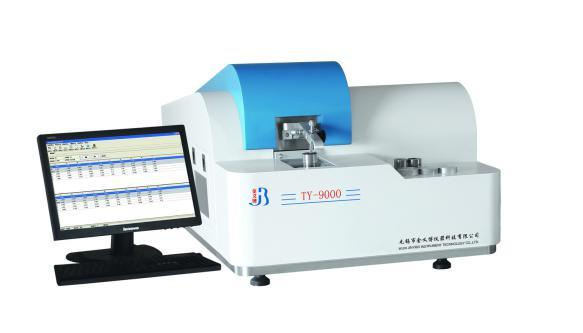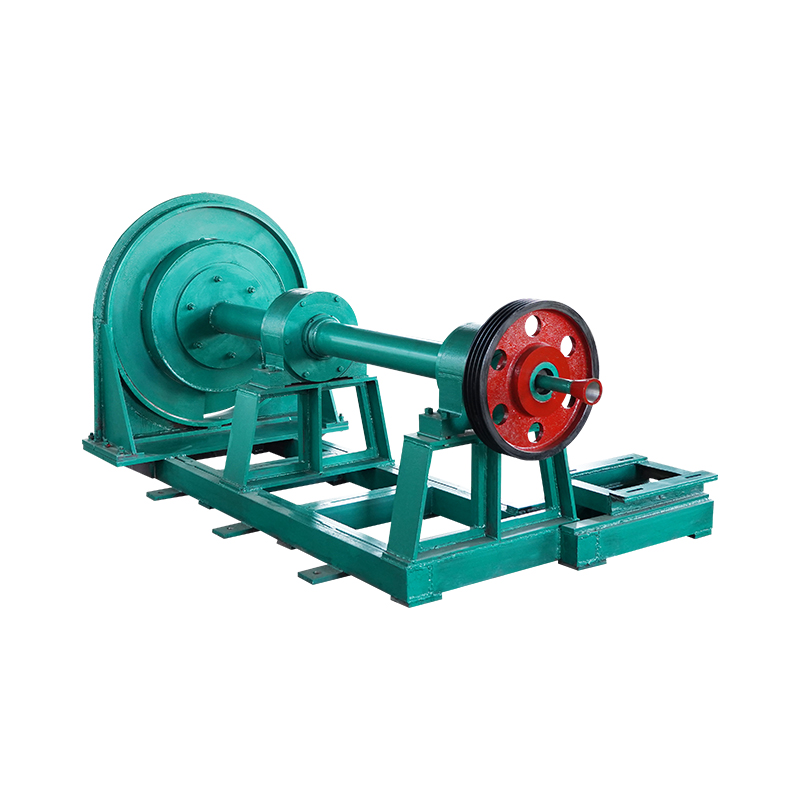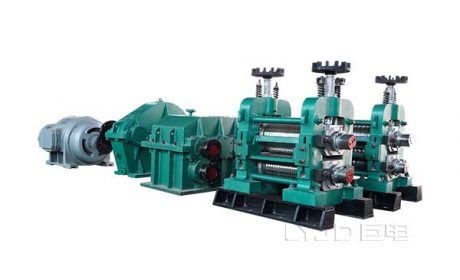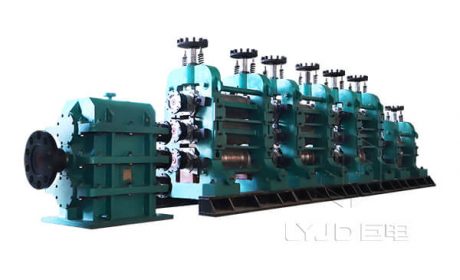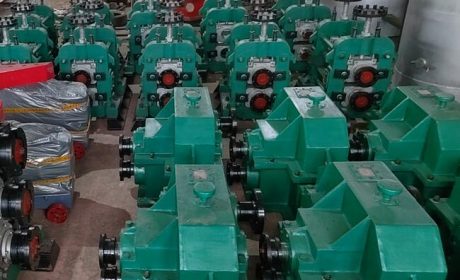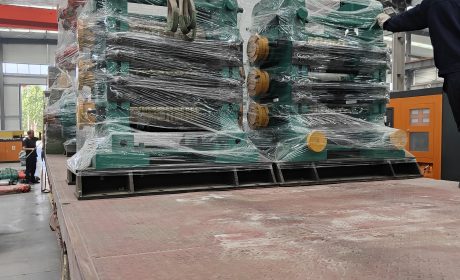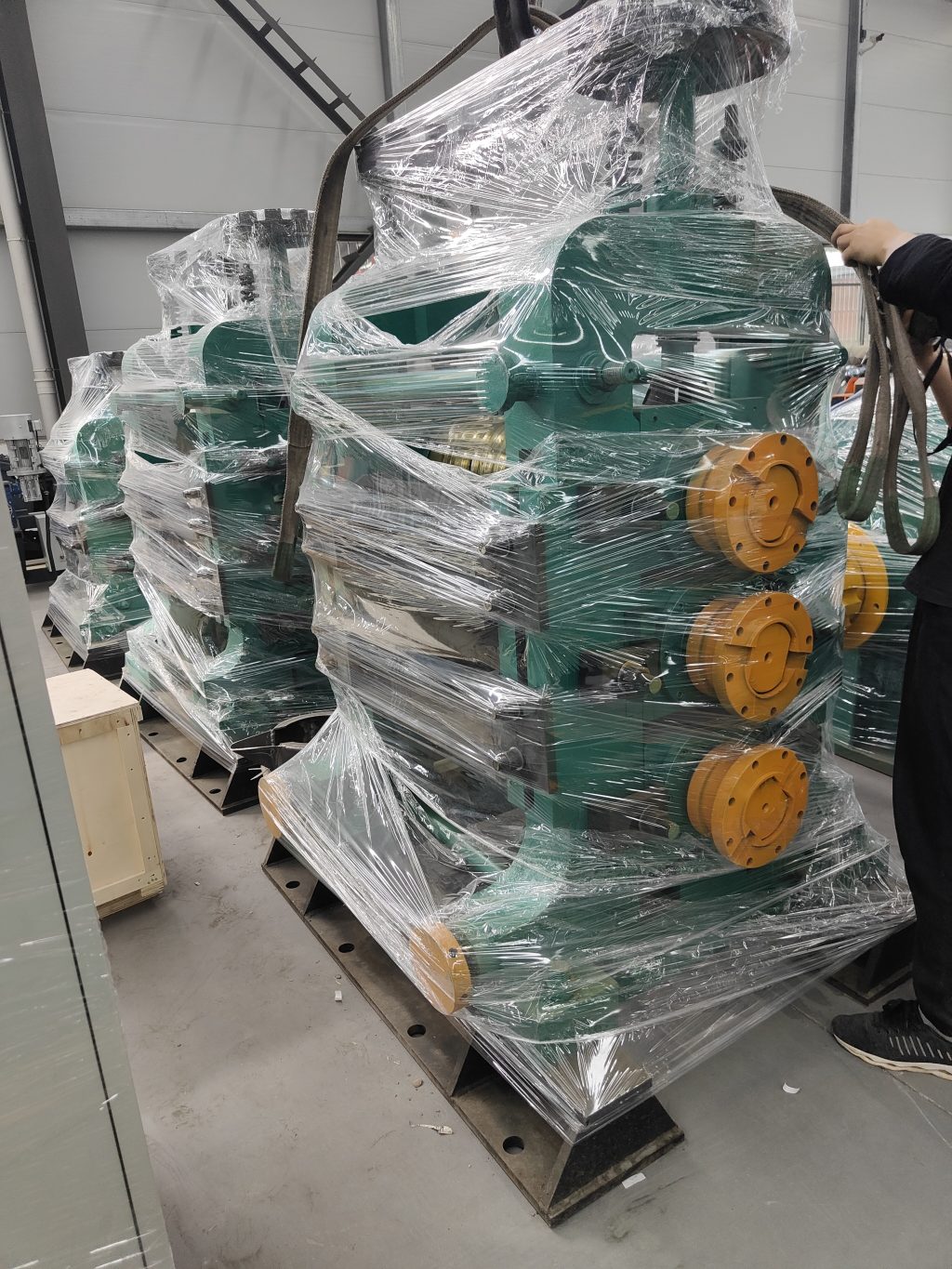
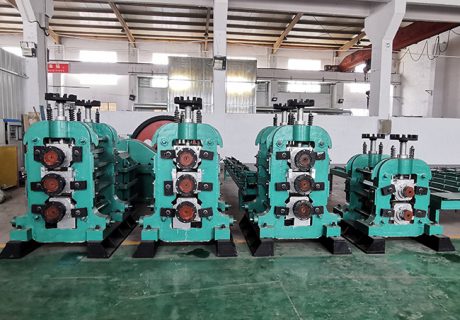
Rolling Mill Machinery is a versatile industrial equipment used in various industries, including metalworking, steel production, and plastic manufacturing. It consists of a series of rollers that apply pressure to deform and shape materials, such as metal sheets, bars, and rods. Rolling Mill Machinery can be customized to meet specific requirements, ranging from small-scale operations to large-scale production lines.
Rolling Mill Machinery is highly efficient in producing bulk quantities of materials with precise dimensions and finishes. It is commonly used to manufacture a wide range of products, including wires, rods, plates, and beams. The machinery is equipped with advanced features such as automatic lubrication, emergency stop systems, and variable speed controls to ensure safety, productivity, and precision during operation.
Rolling mill machines are a very important part of the manufacturing process for various materials and products. They are used to deform and change the thickness of materials. The type of rolling mill a company chooses will depend on the thickness, material, and properties of the finished product they want to achieve. Here are a few types of rolling mills based on the materials they deal with:
Rolling mills are available in different designs and sizes to suit various materials, processes, and production capacities. Here are some key specifications and components of rolling mill machines that business buyers should familiarize themselves with.
Specification
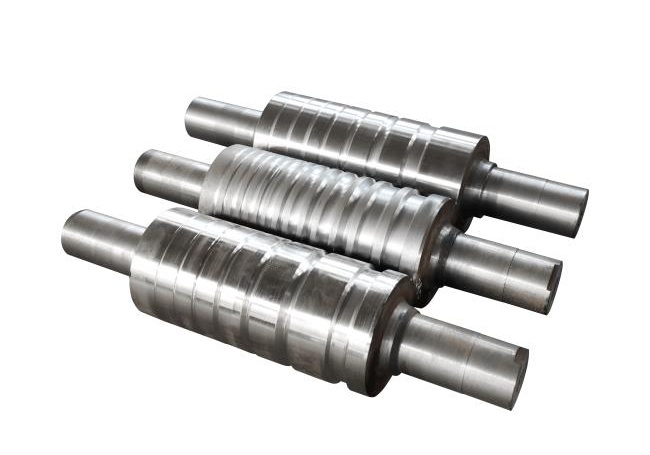
Rollers are the core components of a rolling mill machine. They are usually made of metal, and each roller has a different shape, such as flat, grooved, or square, depending on the type of material and the desired product. The number of rollers can also vary, with some rolling mills having two rollers and others having up to seven or more in a series. For example, in a jewelry rolling mill, a small piece of metal is passed through a series of rollers to flatten and lengthen it into a sheet. The same process can also be used to create different shapes, such as wire or bars, by changing the shape of the rollers.
The power of a rolling mill machine is usually measured in horsepower (HP) or kilowatts (kW). The power of a rolling mill machine determines its ability to handle different types of materials, as well as the thickness and width of the final product. For example, a small benchtop rolling mill for jewelry making may have a power of a few horsepower, while large industrial-scale mills used in the metalworking industry can have powers ranging from tens to hundreds of horsepower or more.
Rolling mill machines speed and torque are critical specifications that determine the performance and quality of the final product. The speed at which the rollers rotate is measured in revolutions per minute (RPM) or meters per minute (m/min), while torque, which is the twisting force that drives the rollers, is measured in newton-meters (Nm) or pound-feet (lb-ft). The proper speed and torque settings are crucial to achieving the desired level of compression and surface finish without damaging the material being processed.
Maintenance
Like all mechanical equipment, rolling mills require regular maintenance to ensure optimal performance and longevity. Here are a few key maintenance tips for rolling mill machines.
Inspect the overall condition of the machine, including the frame, rollers, bearings, and electrical system. Look for signs of wear, damage, or loose parts that need to be repaired or replaced.
Proper lubrication of the rolling mill machine is essential to reducing friction and heat generation between moving parts and extending the lifespan of the machine. Regularly lubricate the bearings, gears, and other parts that require it with the appropriate lubricant as recommended by the manufacturer.
To ensure that the rolling mill machine operates at its best, it is important to keep it clean. Remove dust, debris, and metal shavings from the rollers and other parts with the appropriate cleaning tools, such as brushes or compressed air.
Ensure that all safety guards and devices are in place and functioning properly before operating the machine. Follow the appropriate safety procedures and guidelines to prevent accidents and injuries during maintenance and operation.
Rolling mills have a wide range of application scenarios in the metal working industry.
Rolling mill machines are the key production equipment for processing metal plates, coils, bars, pipes, and other products. These machines are widely used in metalworking plants, such as steel mills, aluminum smelters, magnesium plants, and copper processing factories.
Rolling mills are widely used in the automotive industry to produce sheet metals, bars, and other structural components for vehicles. For example, the production of car body sheets, chassis frames, engine components, and other parts all require the use of rolling mills.
In the construction industry, rolling mills can be used to produce various structural materials, such as steel beams, columns, and profiles. These materials are essential for architectural design and construction.
The decorative and architectural industries can use rolling mills to produce various types of metal products, such as gates, fences, railings, and decorative profiles. Rolling mills can give the metal products an attractive pattern and surface finish.
In addition, the processing and manufacturing industry can also use rolling mill machines to produce finished metal products, semi-finished products, and precision components. These tools are widely used in fields such as machinery manufacturing, electronics, aerospace, and more.
Besides the above application fields, there are other areas where the rolling mill is widely used. For example, the jewelry industry can use a rolling mill to process precious metals like gold, silver, and platinum into sheets, wires, and other shapes for jewelry making. Also, the food industry can use rolling mills to process and manufacture food products, such as cereal flakes, pasta, and other food processing materials.
Choosing the right kind of rolling mill machine for a particular industrial application is crucial for achieving the desired product quality, production efficiency, and cost-effectiveness.
Consider the following key factors when selecting a rolling mill machine:
Ensure that the chosen rolling mill machine is compatible with the type of material being processed, such as metal, plastic, or rubber. Check the machine's technical specifications to verify that it can handle the material's composition, thickness, and hardness.
Determine the production volume requirements and select a rolling mill machine that can meet the desired output. Consider factors such as the machine's speed, roll width, and automation features.
Consider the surface finish, dimensional accuracy, and consistency of the products produced by the rolling mill machine. Choose a machine with the appropriate features, such as roll design and control systems, to achieve the required product quality.
Consider the operational efficiency of the rolling mill machine, including factors such as setup time, maintenance requirements, and energy consumption. Select a machine that offers good efficiency to meet production needs while minimizing downtime and operating costs.
Consider the initial investment cost of the rolling mill machine and evaluate the return on investment (ROI) based on factors such as production capacity, product quality, and operational efficiency. Choose a machine that offers a good balance of performance and cost-effectiveness for the business.
Q1: What kind of material can be processed by a rolling mill machine?
A1: A rolling mill machine can handle various metals, including steel, gold, silver, brass, copper, and aluminum, among others.
Q2: What are the benefits of using a rolling mill machine?
A2: The benefits of using a rolling mill machine include saving time and effort, obtaining accurate thickness and shape, reducing material waste, and enhancing the overall efficiency of metalworking processes.
Q3: What are the main types of rolling mill machines?
A3: The main types of rolling mill machines are as follows:
What is the cost of steel rolling mill plant in India?
What is a rolling mill machine?
Please send us your request and we reply to you with in 24 hours.



Submit Request