The cornerstone and technological innovation of industrial civilization
Steel is the skeleton material of modern industry, and its production and processing technology directly determines the quality and efficiency of industrial development. As the core equipment of the steel industry chain, steel rolling mill machine carries the key mission of converting steel billets into various types of profiles, plates and pipes. This article will discuss the historical evolution, technical principles, application scenarios and future trends of rolling machinery to reveal its core position in modern industry Steel rolling mill machine.
Historical evolution of steel rolling machinery The origin of rolling technology can be traced back to the European hand forging era in the 14th century, but the real industrial rolling began with the first industrial revolution in the late 18th century. In 1783, British engineer Henry Cort invented the "Puddling Process" and developed the first hydraulically driven rolling mill for the production of rails and plates. This technological breakthrough increased the efficiency of steel production by dozens of times, directly promoting the explosive growth of the railway and shipbuilding industries.
In the mid-19th century, with the popularization of steam power, rolling machinery gradually achieved scale. The advent of the Bessemer converter steelmaking process in 1856 further solved the problem of raw material supply, and rolling mills began to develop in the direction of large-scale and continuous production. In the early 20th century, U.S. Steel took the lead in introducing automated control systems, marking the modernization of rolling technology.
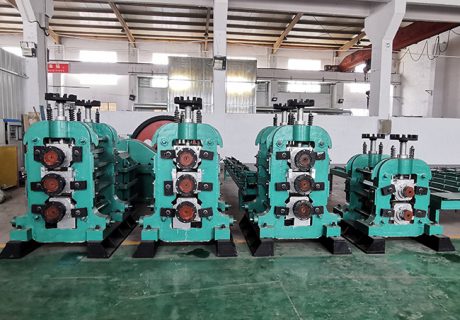
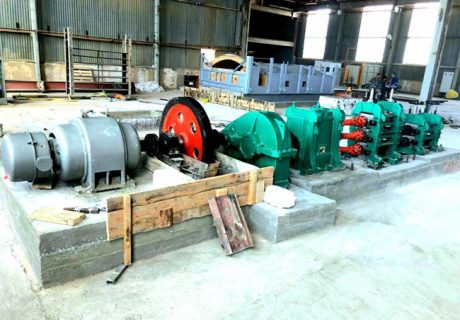
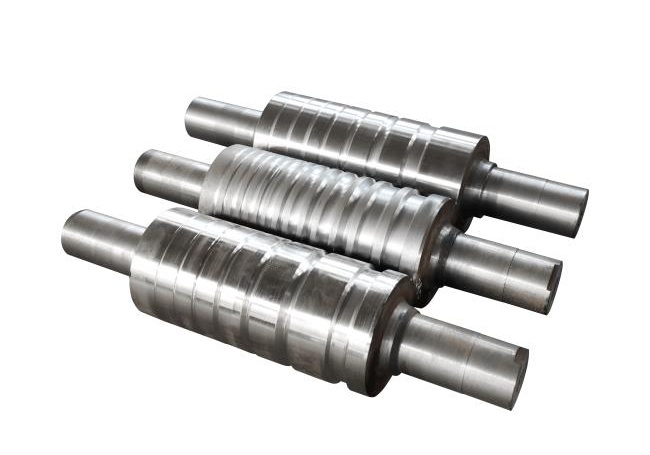
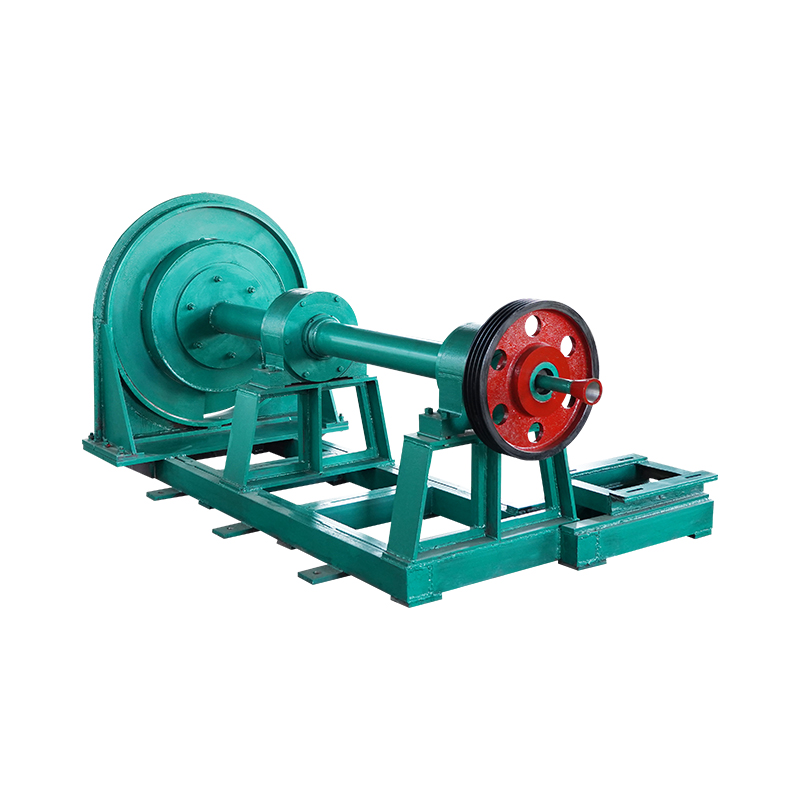
Core technical principles of rolling machinery The core function of rolling machinery is to process steel billets into target shapes and sizes through multiple passes of plastic deformation. Its technical implementation depends on three major systems: power transmission system, roll assembly and cooling and lubrication system.
Process division between hot rolling and cold rolling Hot rolling process: rolling above the recrystallization temperature of the steel billet (about 1100°C), using the high plasticity of steel at high temperature to greatly reduce deformation resistance. Typical equipment includes hot rolling mills and reversible rolling mills. The products are mainly thick plates and H-shaped steels, which are widely used in the fields of construction and bridges. Cold rolling process: hot-rolled semi-finished products are processed at room temperature and thin plates (thickness can be up to 0.1mm) are produced through high-precision rollers. Cold-rolled steel has a high surface finish and excellent mechanical properties, making it the preferred material for automotive panels and home appliance housings.
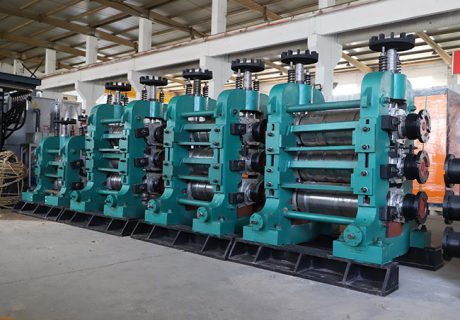
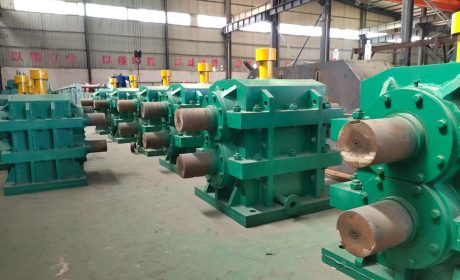
Type and structure of rolling mill Two-roll mill: simple structure, suitable for rough rolling stage; Four-roll mill: by adding support rollers to reduce the deflection of the working rolls and improve the accuracy of the plate; Planetary mill: multiple sets of small-diameter rollers are used to rotate around the billet to achieve ultra-high-speed rolling, mostly used in stainless steel strip production.
Intelligent control system Modern rolling mills are generally equipped with PLC (programmable logic controller) and AI algorithms, which can adjust the rolling force, speed and temperature parameters in real time. For example, the "CVC® Plus" technology developed by SMS Group in Germany dynamically compensates for plate shape deviations through axial movement of the rollers, with an accuracy of up to micron level.
Application scenarios and industrial value The downstream applications of steel rolling machinery cover almost all industrial fields: Construction industry: H-beam, rebar and other structural parts account for more than 50% of global steel consumption; Automobile manufacturing: high-strength steel and aluminum alloy composite rolling technology help lightweight car bodies; Energy field: large-diameter seamless steel pipes for nuclear power rely on precision rolling technology; Home appliances and electronics: cold-rolled silicon steel sheets are the core materials for transformers and motors.
Take China as an example, crude steel output will reach 1.013 billion tons in 2022, of which about 70% will need to be processed through rolling processes, directly giving rise to a rolling mill equipment market of over 100 billion yuan.
Future trends and technical challenges
Green rolling technology Traditional rolling energy consumption accounts for 15%-20% of the total energy consumption of steel production. The new generation of rolling mills can improve energy efficiency by 30% through waste heat recovery, electromagnetic induction heating and other technologies. Mitsubishi Heavy Industries' "ECOARROW" rolling mill has achieved a zero-emission cooling water circulation system.
Collaborative innovation of materials and processes With the popularization of new materials such as high-strength steel and titanium alloy, rolling mills need to adapt to higher rolling forces and temperature ranges. For example, the use of ceramic-coated rollers can withstand high temperatures of 1400°C and extend the life of the equipment.
Digital twins and predictive maintenance By building a digital twin model of the rolling mill, the stress distribution and defect evolution during the rolling process can be simulated. The Predix platform of General Electric (GE) in the United States has achieved real-time prediction of roller wear and reduced unplanned downtime losses.
V. Conclusion From steam drive to AI empowerment, the evolution of steel rolling machinery can be called a microcosm of industrial technology. Driven by the dual goals of "dual carbon" and intelligent manufacturing, rolling technology is accelerating its iteration in the direction of efficiency, precision and sustainability. As the "silent craftsman" of industrial civilization, the rolling mill is not only the physical carrier of steel forming, but also the crystallization of human wisdom to break through the limits of materials. In the future, with the maturity of disruptive technologies such as superconducting rolling and 3D printing rollers, this field may usher in a new golden age.